



ElectroAcoustics Magazine: Montage by Sergej Ejzenštejn (2011/09/09)
Part of the inaugural Milanese editions of ElectroAcoustics Magazine (RDM Records, 2011–2012), this text anchors the historic Italian roots of the magazine, which has expanded internationally with the launch of our new US hub, continuing to publish cutting-edge critical literature and research around sound and technology today.
In more specific and technical terms—as we have already pointed out elsewhere (ref. 2), to which reflection we refer for any further depth—the "principle of segmentation of the object into different camera angles" (ref. 1, p. 354) and its reunification into a generalized or complete image is the defining peculiarity of montage, which "leaves the event intact (the captured reality) and at the same time interprets it differently." (1)
That being said, we note that the principles of montage operate with precision within the realms of electroacoustic music and in relation to sonorous reality; hence, it is no coincidence that we speak of the sound object as a sound image. (3)
"The principle of the segmentation of the object into different camera angles and of the reunification of these representations into a complete image" is reproduced in the cinematographic field starting from the study conducted on the "behavioral process of the eye," (1) made possible precisely by technological development. From photography to cinema, the cropping of portions of reality and the manner in which they are cropped correspond to a new activity of sight. This activity is directly concerned with the study of the conditions of reality and our knowledge of it—otherwise unprecedented—wholly attributable to the apparatus. (4) Eisenstein would not have posed the following question had he witnessed the emergence of technologies applied to music: "Does sound know an analogous possibility of technical reproduction of the behavioral conditions of the ear?" (1) Today, the answer is affirmative: that possibility is music produced with technologies.
But it was not so then, in the late 1930s, when sound in cinema had barely arrived in time to stir up the controversies that would condition its entire history. Furthermore, the filmmaker was in open disagreement with the path taken by the first rudimentary experiments in sound cinema, which followed the commentarial mode of conceiving music in relation to images from the silent era and its live accompaniments. Instead, he advocated for the compensation of opposites through a dialectical relationship—the generalization into an image of different languages as the dominant principle within the multimedia product—a point we have not failed to emphasize even once.
[R. Daniele, graciously extended to ElectroAcoustics Magazine, from ongoing reflections for the book Voce Sola, an essay on vocal discourse, upcoming from RDM Records.]
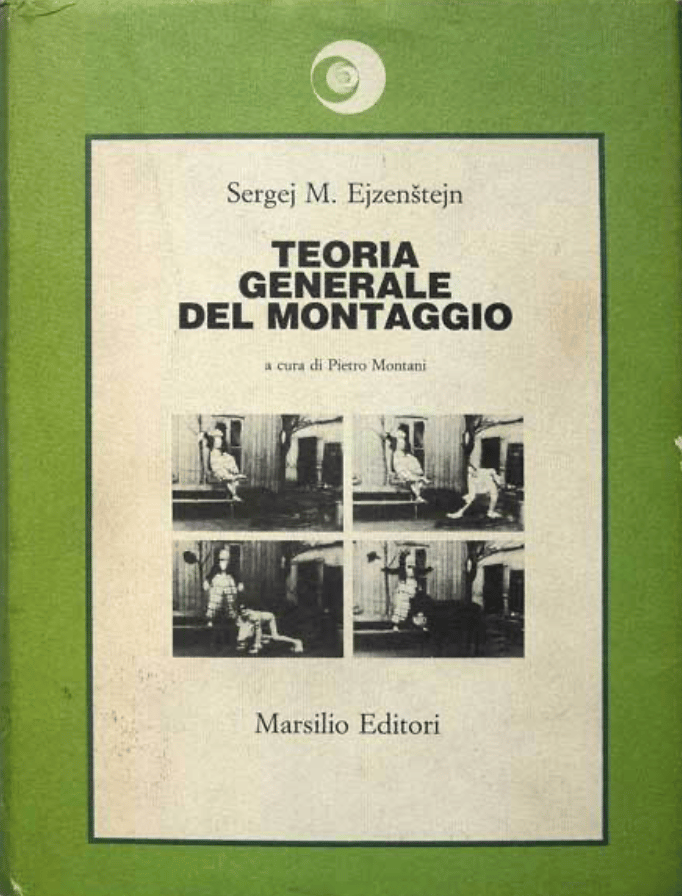
A technical-linguistic study of Sergei Eisenstein’s General Theory of Montage. This critique explores the dialectical relationship between deconstruction and reconstruction, bridging the gap between cinematic shots and the "sound image" in contemporary electroacoustic music.
[ElectroAcoustics Magazine, September 9th 2011]
The General Theory of Montage by the brilliant Russian filmmaker Sergei Eisenstein—written in the late 1930s and published in Italy by Marsilio in 1985—is one of the finest volumes of all time. It has held a golden place in our library for more than a decade, instantly and continuously sparking pivotal paradigms regarding the vast spectrum of activity between arts and technologies.
In the book in question, characterized by a distinct interdisciplinary nature, two fundamental points are theorized through the technical-linguistic analysis of undisputed historical masterpieces.
Point one: within the composition and methods of every single work, it is necessary to express simultaneously—in their distinction and dialectical relationship—representation on one hand (of the phenomenon, the typical contents of human reality), and on the other, the general image, or the generalization into an image of the phenomenon (the form and its processes, the formal principles and laws governing construction). To put it more succinctly: something fundamental and pristine about the content (inherent to the captured, and thus represented, reality, which would otherwise remain unperceived) is restored by the rhythm of expression through the medium of the artwork itself. (1)
Point two: the principle common to all arts is the dialectical relationship between deconstruction (of the reality drawn upon) and reconstruction (within the artwork itself)—the dismantling and reassembling of the representational datum, from the composition of the single element to the global structure. Emphasis is placed on the fact that cinema involves the greatest heterogeneity of perceptive elements within a signifying image. (2) Montage is thus delineated as the constructive operation par excellence that governs any work of art as well as any work of man, bound to a concretely cognitive intention toward reality, uncovering concrete aspects of it that would remain unknown in its absence. (Ref. 1, pp. 39-40) Furthermore, "a montage that does not take into account the complex of all elements and their ensemble has as yet nothing in common with the authentic work of art." (Ref. 1, p. 36)
Footnotes
S. M. Eisenstein, “Montazh”, in Izbrannye proizvedenija v šesti tomach, (vol. II), Moscow, Iskusstvo, 1963-1970 [It. trans. Teoria generale del montaggio, Venice, Marsilio, 1985, p. 216].
R. Daniele, "Il dialogo con la materia disintegrata e ricomposta" [The dialogue with disintegrated and reassembled matter], an analysis of Thema (Omaggio a Joyce) by Luciano Berio, RDM, Milan, 2010, p. 70.
The following are pivotal texts from whose study it is possible to derive a preliminary understanding of the subject of the image in the singular form: M. Chion, L’audio-vision. Son et image au cinéma, Paris, Éditions Nathan [It. trans. L’audiovisione, suono e immagine nel cinema, Turin, Lindau, 2001]; P. Bonitzer, Le Champ aveugle, Cahiers du Cinéma-Gallimard, Paris 1982; J. Aumont, L’œil interminable. Cinéma et peinture, Paris, Librairie Séguier, 1989 [It. trans. L’occhio interminabile. Cinema e pittura, Marsilio, Venice, 1991]; a comprehensive survey of theories regarding the relationship between cinema and the visual arts can be found in: A. Costa, Il cinema e le arti visive, Turin, Einaudi, 2002. I have discussed all of this in: R. Daniele, Ascenseur pour l'échafaud, il luogo della musica nell'audiovisione [Ascenseur pour l'échafaud: The Place of Music in Audio-Vision], RDM, Milan, 2011.
W. Benjamin, Das Kunstwerk im Zeitalter seiner technischen Reproduzierbarkeit, “Zeitschrift für Sozialforschung”, Paris, 1936; Das Kunstwerk im Zeitalter seiner technischen Reproduzierbarkeit, Suhrkamp Verlag, Frankfurt, 1955 [It. trans. L’opera d’arte nell’epoca della riproducibilità tecnica, Turin, Einaudi, 1966].
Get in touch




© 2005–2026 ROMINA DANIELE. ALL RIGHTS RESERVED.
ALL ARTISTIC WORKS, THEORETICAL ESSAYS, AND AUDIO-VISUAL MATERIALS ARE THE EXCLUSIVE INTELLECTUAL PROPERTY OF THE AUTHOR. PLUGINS AND CONTACT FORMS COLLECT MINIMAL DATA FOR SECURE, DIRECT CORRESPONDENCE ONLY. AS AN INDEPENDENT INSTITUTIONAL PLATFORM DEDICATED TO PURE PHENOMENOLOGICAL, VOCAL, AND SONIC RESEARCH, THIS ARTISTIC ENTITY MAINTAINS A STRICT POLICY OF COMPLETE DETACHMENT FROM ALL FORMS OF BLASPHEMY, EXPLICIT THEMES, OR PROFANE PERFORMANCES, SYSTEMATICALLY EXCLUDING THEM FROM ITS CATALOG AND SCOPE.